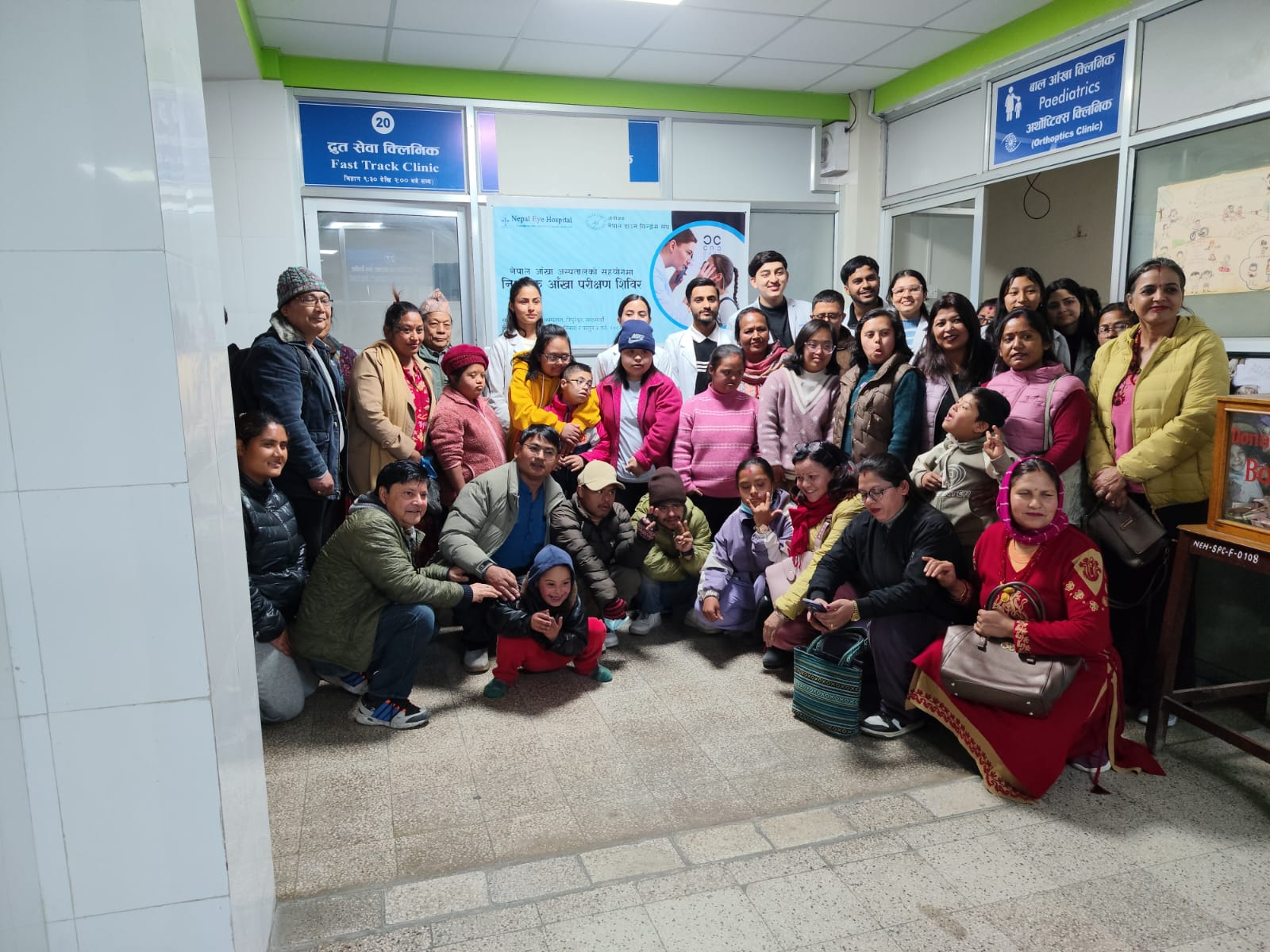
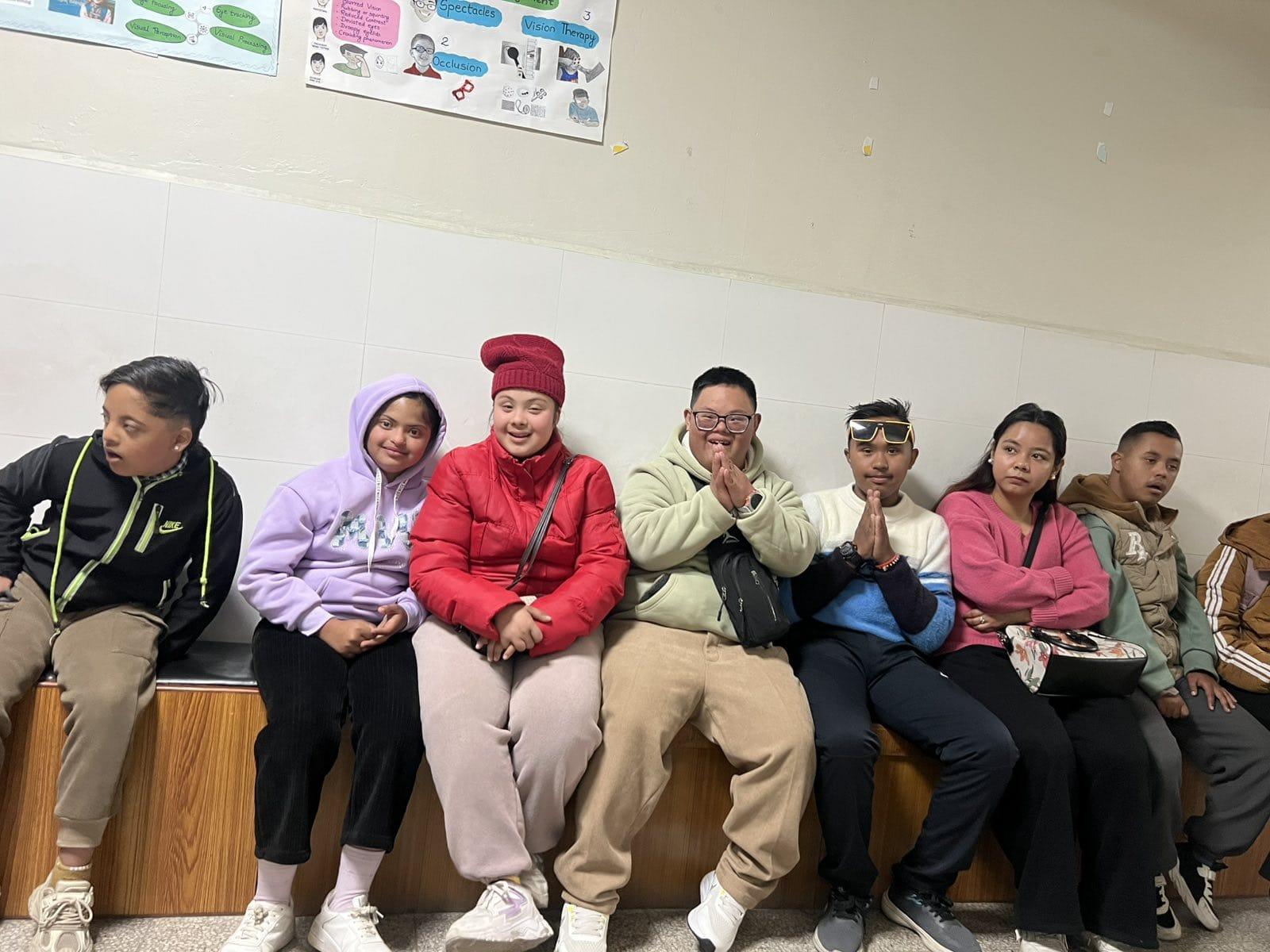
KATHMANDU, February 14, 2026 – In a significant step toward inclusive healthcare, the Down Syndrome Association of Nepal (DSAN), in collaboration with the pioneering Nepal Eye Hospital, Tripureshwor, successfully conducted a specialized “Eye Camp” for the Down syndrome community today.
The two-day event (Day 1: February 7,2026 AD/Margh 24, 2082 BS, Day 2: February 14,2026 AD/ Falgun 2,2082 BS), held at the Nepal Eye Hospital, Tripureshwor, provided comprehensive ocular services to 57 participants with Down syndrome. Demonstrating the project’s wide reach, the beneficiaries spanned a vast age range, from infants as young as 1 year old to adults aged 46.


Specialized Medical Team
The camp was led by a distinguished team of ophthalmic experts, including Prof. Dr. Raju Kaiti and Dr. Manish Dahal. Along with their dedicated medical team, the doctors focused on the unique physiological needs of patients with Down syndrome, who are statistically more prone to vision-related challenges.
Comprehensive Care & Clinical Procedures
The camp provided a “Comprehensive Ocular Examination” tailored to the specific needs of the participants. Based on the specialized nature of the camp, the clinical sessions included:
- Refraction Testing:Identifying needs for prescription glasses, as individuals with Down syndrome are significantly more likely to require them due to conditions like myopia (near-sightedness) or hyperopia (farsightedness).
- Ocular Segment Assessment:A detailed physical check of eye structures to detect issues like cataracts.
- Binocular Single Vision Evaluation:Assessing how well both eyes work together to ensure proper depth perception and to check for strabismus (misaligned eyes).
- Management Planning:Formulating a treatment and management plan for each participant based on their specific diagnosis.
They gave at least 30 to 45 minutes to each patient as they are very sensitive and need more care while handling the camp than normal people. The camp aimed to give service to more than 100 people but could not due to limited resources and other limiting factors.
Camp Results: Critical Findings
The screenings revealed a high prevalence of vision issues within the participant group, highlighting the necessity of such outreach programs.
| Condition Found | Number of Participants | Management Recommended |
| Cataract | 12 | Referral for further monitoring or surgical intervention. |
| Refractive error Vision Problems | 42 | Prescribed the necessity to wear corrective glasses. |
| Normal Eye Health | 13 | Advised on regular follow-up examinations. |
| Manifest deviation | 5 | Simply wearing the full prescription for farsightedness can completely straighten the eyes by reducing the effort needed to focus. |
| Nystagmus | 7 | Management is highly specialized and often involves a combination of optical, pharmacological, and surgical strategies tailored to the specific type of nystagmus (e.g., congenital or acquired). |
| Nasolacrimal Duct Obstruction | 3 | Referral for further monitoring or surgical intervention. |
| Blepharitis | 2 | Soothe the lids and reduce the bacterial load or oil blockage.
|
| Meibomian gland dysfunction | 3 | Prioritize daily 10-minute heated eye mask applications followed by gentle eyelid massage to liquefy and express stagnant oils from the glands. |
| Total no of participants. | 57 | Some have more than one problem. |
A Partnership for Progress
Organized by the Down Syndrome Association of Nepal (DSAN)—founded by parents and friends to support every aspect of life for those with Down syndrome—and supported by Nepal Eye Hospital (the first dedicated eye hospital in Nepal, established in 1974), the initiative aimed to bridge the gap in accessible healthcare.
The camp helped the parents know the problems their children has which helped them with the early treatment required before it gets late. The camp also provided aid with glasses and medicines for those associated with the vision problems. DSAN is doing its best to provide treatment to cataract in as much minimal cost as possible or free of cost if possible.
“Early detection is key,” noted the medical team. “Many vision issues in people with Down syndrome, such as early-onset cataracts, can be managed effectively if caught early, significantly improving their quality of life”.
The organizers expressed their gratitude to the families and the medical team for ensuring that no one was left behind in the pursuit of clear vision.