CHYNABAZAR.COM
Company Profile
Transforming Nepal’s Retail Ecosystem Through Direct Global Commerce
Executive Summary
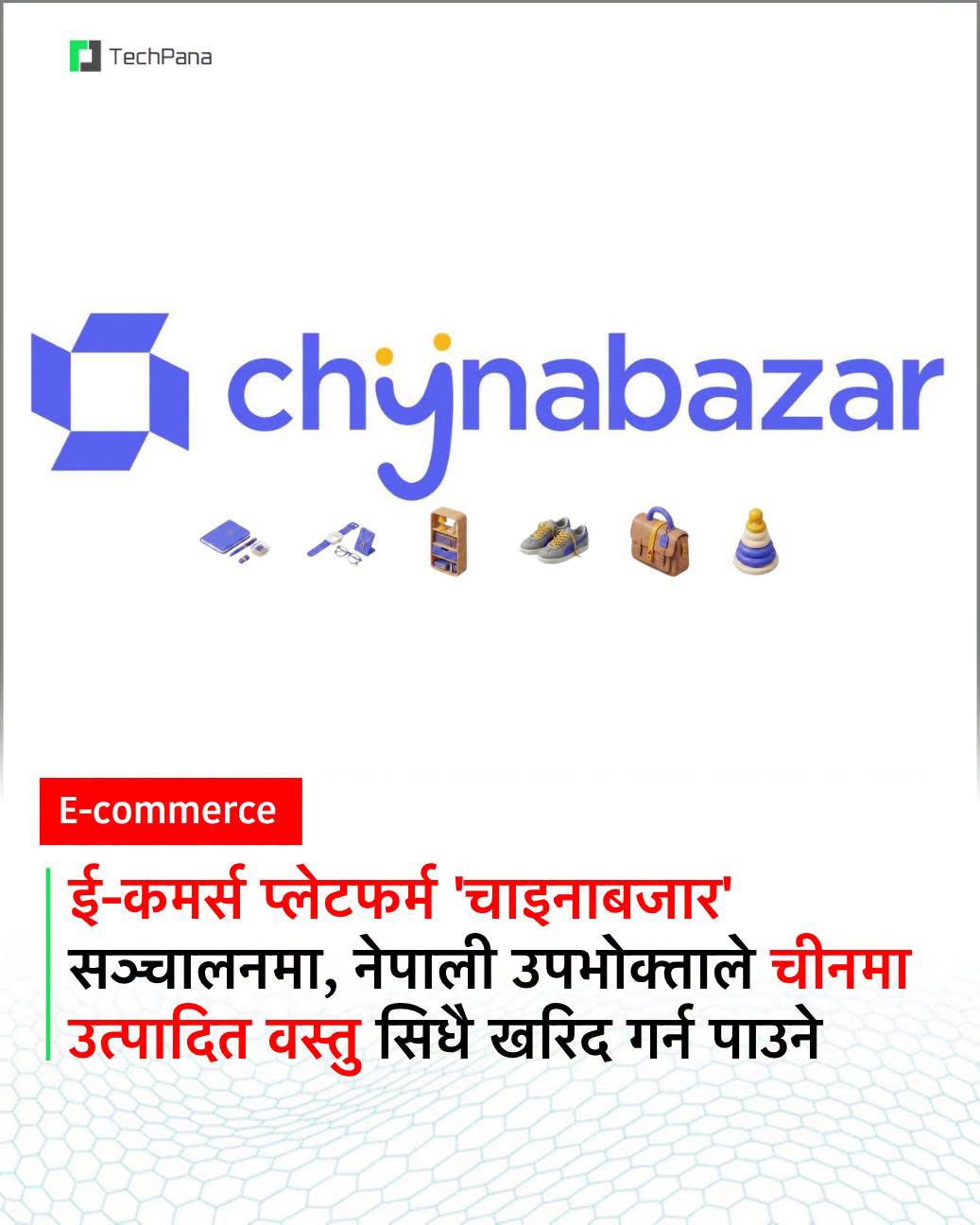
ChynaBazar.com is a next-generation Nepali e-commerce company established to transform the country’s retail and supply chain ecosystem by connecting Nepali consumers directly with manufacturers in China. Rather than operating as a conventional online marketplace, ChynaBazar follows a fully integrated business model that manages sourcing, importing, warehousing, inventory, and nationwide delivery under one operational framework.
The company was founded with a mission to solve one of Nepal’s most persistent economic problems—the high cost of imported consumer goods caused by long and inefficient supply chains. By eliminating unnecessary intermediaries, ChynaBazar provides consumers with authentic products, competitive prices, faster delivery, and a more transparent shopping experience while contributing to Nepal’s growing digital economy.


The National Problems
Nepal’s retail and e-commerce sector faces several structural challenges.
1. Multiple Layers of Middlemen
Imported products typically move through:
Manufacturer → Exporter → Importer → Distributor → Wholesaler → Retailer → Consumer
Each additional layer increases cost while reducing pricing transparency.
2. High Consumer Prices
Consumers often pay significantly more than factory prices because every intermediary adds profit margins, logistics expenses, and handling costs.
3. Counterfeit and Unverified Products
The market has struggled with fake brands, grey-market imports, inconsistent warranties, and limited product traceability.
4. Inefficient Supply Chain
Traditional procurement systems create:
- Long delivery times
- Frequent stock shortages
- High inventory costs
- Poor forecasting
- Limited nationwide availability
5. Limited Digital Commerce Trust
Many consumers remain cautious about online shopping because of:
- Delivery uncertainty
- Poor after-sales service
- Price inconsistencies
- Lack of product authenticity
6. Dependence on Fragmented Import Networks
Nepal depends heavily on imported consumer goods but often lacks integrated procurement and logistics systems that can optimize costs and efficiency.
ChynaBazar Innovation
ChynaBazar introduces a fully integrated cross-border retail ecosystem.
Instead of relying on multiple importers and wholesalers, the company controls every major stage of the supply chain.
Manufacturer
↓
Direct Sourcing
↓
International Procurement
↓
Import Management
↓
Company Warehouse
↓
Digital Marketplace
↓
Customer Delivery
This vertically integrated approach improves operational efficiency, reduces unnecessary costs, and provides greater control over quality and inventory.
Innovative Business Model
Direct Factory Procurement
Products are sourced directly from verified manufacturers in China, reducing unnecessary intermediaries.
Integrated Import System
The company manages procurement, customs coordination, and logistics through its own operational network.
Central Warehousing
Inventory is stored in company-managed warehouses, enabling faster fulfillment and more reliable stock availability.
Nationwide Distribution
Products are delivered through organized logistics, improving delivery speed and customer satisfaction.
Digital Commerce Platform
Customers can browse products, compare prices, place orders, and make secure digital payments through a modern online platform.
Technology Innovation
ChynaBazar leverages digital technology to modernize retail operations by integrating:
- AI-driven product recommendations
- Digital payment integration
- Inventory management systems
- Warehouse automation
- Order tracking
- Customer relationship management
- Analytics-based demand forecasting
- Data-driven purchasing decisions
- Mobile-first shopping experience
These technologies enhance efficiency, reduce operational costs, and improve customer experience.
Execution Strategy
Phase 1
Establish direct sourcing partnerships with manufacturers.
Phase 2
Develop integrated warehousing infrastructure.
Phase 3
Launch nationwide e-commerce operations.
Phase 4
Expand logistics coverage across Nepal.
Phase 5
Scale product categories and strengthen digital services.
Competitive Advantages
Transparent Pricing
Reduced intermediary costs allow more competitive pricing.
Authentic Products
Direct manufacturer relationships improve product traceability and quality assurance.
Faster Delivery
Centralized inventory enables quicker order fulfillment.
Reliable Inventory
Warehouse management minimizes stock shortages.
Better Customer Experience
An integrated platform supports consistent ordering, payment, and after-sales service.
Economic Impact
The company’s model has the potential to:
- Reduce the cost of imported consumer goods.
- Increase competition within Nepal’s retail sector.
- Improve access to authentic international products.
- Encourage broader adoption of digital commerce.
- Generate employment in logistics, warehousing, technology, and customer service.
- Strengthen Nepal’s digital retail infrastructure.
Social Impact
Consumer Benefits
- Affordable prices
- Genuine products
- Transparent shopping
- Secure payments
- Improved delivery experience
Business Benefits
- Modern supply chain practices
- Increased operational efficiency
- Technology-enabled retail
- Stronger customer trust
National Benefits
- Growth of Nepal’s digital economy
- Promotion of technology-enabled commerce
- Development of logistics and fulfillment capabilities
- Support for digital transformation in retail
Vision
To become Nepal’s most trusted cross-border digital commerce platform by making global products accessible through efficient, transparent, and technology-driven retail.
Mission
To simplify international commerce for Nepali consumers by eliminating unnecessary intermediaries, ensuring authentic products, and delivering a seamless shopping experience through innovation and operational excellence.
Core Values
- Customer First
- Transparency
- Innovation
- Operational Excellence
- Integrity
- Technology Leadership
- Continuous Improvement
- Sustainable Growth
Future Roadmap
ChynaBazar aims to expand beyond conventional e-commerce by building a comprehensive digital commerce ecosystem that incorporates AI-assisted shopping, intelligent logistics, advanced warehouse automation, data-driven inventory planning, and cross-border trade partnerships. The long-term vision is to position Nepal as a more efficient participant in regional digital trade while delivering greater value to consumers and supporting the evolution of the country’s retail sector.
Tagline:
“Connecting Nepal Directly to the World’s Manufacturers.”
In-text Citations (APA 7th)
Use these throughout the document where applicable.
- (ChynaBazar, n.d.)
- (Technology Khabar, 2026)
- (Onlinekhabar, 2026)
Nepal’s retail market is characterized by long and fragmented import supply chains, increasing the cost of consumer goods (Technology Khabar, 2026).
ChynaBazar adopts a vertically integrated sourcing, importing, warehousing, and delivery model designed to reduce intermediaries and improve pricing transparency (ChynaBazar, n.d.).
The platform aims to strengthen Nepal’s digital commerce ecosystem through direct manufacturer-to-consumer trade (Technology Khabar, 2026).
References
APA 7th Edition
ChynaBazar. (n.d.). ChynaBazar: Enjoy your shopping. Retrieved July 30, 2026, from https://chynabazar.com/
Onlinekhabar. (2026, July 28). ई-कमर्स प्ल्याटफर्म ‘चाइनाबजार’ बुधबार सार्वजनिक हुने [E-commerce platform ChynaBazar to be launched on Wednesday]. Onlinekhabar article
Technology Khabar. (2026, July 27). Chynabazar to launch on July 29: A disruption in e-commerce, connecting direct-from-manufacturer to consumer. Technology Khabar article
Suggested additional academic references
To strengthen the “National Issues,” “Innovation,” and “Digital Commerce” analysis, you can also cite authoritative reports such as:
- World Bank. (2025). Nepal Development Update.
- Asian Development Bank. (2025). Asian Development Outlook.
- United Nations Conference on Trade and Development. (2024). Digital Economy Report.
- International Trade Centre. (2024). SME Competitiveness Outlook.